Cranberry Butter

I can never make enough of this during the winter months. It works well with fresh or frozen cranberries. We love adding it to Greek yogurt. It is the perfect amount of tang and sweet.

Recipe

24 oz cranberries
1 cup maple syrup
2 oranges zested and juiced
2 sticks cinnamon

Simmer all ingredients together for about 10 minutes until the cranberries pop. Once off the heat, blend with an immersion blender until smooth. Place in jar and keep in the fridge. Use within 1 month.

Wild Berry Syrup

I love foraging for wild berries! In the picture above from the top left to right is elder berries, rose hips, hawthorn berries and choke cherries. Of course, I don’t harvest them all at once, so I will freeze what I gather until all the berries are ripe and gathered. This is a simple syrup that is delicious and boosts the immune system with all its anti-viral bioflavonoids and antioxidants. I like to freeze my syrups, so they last all winter and spring long. With the added honey it is more of a thick slushy when frozen making it easy to scoop out of the jar.

Recipe

In a large pot place 4 or more cups of fresh and/or frozen berries and cover with purified water, a few pieces of fresh ginger, a few cinnamon sticks and 5 to 10 cloves.

Simmer until the liquid has cooked down to half the volume. Strain and add equal amounts of honey.

Pour into bottles and place in fridge or freezer if using large quart jars. Yummy on pancakes and ice cream too!

Dandelion Jelly

Dandelion jelly is sunshine in a bottle. Many are always so surprised by the delicious taste! You will love putting this on toast or pancakes and more!

Recipe

4 cups dandelion petals (sepals or green parts removed)
4 cups water
4 cups cane sugar
2 oz powdered fruit pectin
2 tablespoons lemon juice

Simmer the petals in the water for 10 minutes. Strain and squeeze out as much liquid as possible. Pour the liquid into a big pot and add the pectin. Bring to a boil and add the sugar. Bring to a boil and stir constantly for 1 minute. Pour the jelly into hot sterilized jars. Clean the rims, place the lids and rings on the jars and process in a water bath or steam canner for 10 minutes. Make sure the lid seals and store until use.

Bread and Fermentation Class Open Enrollment

rp_fermentation-1-300x225.jpg

Come and learn about the significance of the gut microbiome and how to care for it with the skill of preserving through fermentation of veggies, salsa, fruit and bread. The workshop is $15. You’ll get to taste lots of delicious fermented foods and take home your own sourdough starter.  Class will be held August 1st at 1 PM. Deadline to sign up is July 25th.

Did you know that what you eat and how you live directly impacts your health and how you feel? For every cell we have in our body there are 10x more bacteria, viruses, fungi and protozoa that are all talking to our mitochondria, coordinating repair and growth. We are only 1% human… the rest of us is an ecosystem that works harmoniously with our body if we are treating them right. Those little critters are the control center of the body, regulating hormones, inflammation, brain chemistry and what we do or don’t absorb. We know that 70% of our immune system is in the gut, where health begins. Our gut health even impacts our brain activity because more gaba and serotonin are produced in the gut than the brain. For every 1 message our brain sends to our gut, our gut sends 9. These messages include the activation of our immune system, the growth of new brain cells and the adaptability of these new cells to learn. More science is finding that our gut microbiome is critical to whether or not we experience chronic illness and impacts the health of our future. Come and learn what foods trigger inflammation and which foods to eat more of. We will learn the simple skill of fermenting vegetables like kimchi and salsa, fruit chutneys and even fermented bread which lowers the gluten content significantly. Seating maximum for this class is 25. No refunds available after the deadline. Cost goes to food purchased for the class.

Class Price – $15

Sign up here.

Cranberry Relish

cranberry sauce

Why used canned cranberry sauce when it’s so easy to make it?! I like this recipe because you can create different varieties with it. You can add orange, pears and ginger if you like.

Recipe

1 (12 oz) bag of fresh cranberries

1 cup organic sugar

3/4 cup water

1/4 teaspoon sea salt

Orange variation add 1 tablespoon orange zest and 2 tablespoons orange juice

Ginger Pear variation add 1 tablespoon fresh grated ginger, 1/4 teaspoon cinnamon, 2 pears peeled and chopped

Place cranberries, sugar, water, salt and orange zest, ginger, cinnamon, and pears (if using) in a large stainless steel saucepan. Bring to a boil and turn down to medium, let simmer until slightly thickened and cranberries have popped for about 10 minutes. Turn off heat and add the orange juice if using. Store in the fridge for up to a week before using.

Kimchi – Learning How To Make Fermented Foods

fermentation 2

Fermented foods are a big thing right now and rightfully so. Science is now finding more answers behind the microbiome and what it is all about. Did you know we are only 1% human?! The rest of us consist of bacteria, viruses, fungi and protozoa and they out number us 100:1. These little guys are critically important to the health or disease we experience in life. They are all speaking with our mitochondria to coordinate repair and growth within our cells that help to fight off disease. The microbiome is the control center of our body. For every 1 message our brain sends to the gut, our gut sends 9 to the brain. These messages control our stress response, brain hormone production, activation of the immune system and much more. We also know that more gaba and serotonin is made in the gut than in the brain effecting how we feel mentally, making our gut our second brain. If our microbiome is off it can impact our mood, create brain fog, anxiety, behavioral disorders and even trigger depression. This is why it’s so important to take care of these little guys and to replenish our gut with them daily. A great way to do this is to eat fermented foods. The fermented foods you make at home contain far more micro-organisms than a capsule you can buy in the store. Fermenting your food can save a lot of money in the long run and it tastes really good.

You can ferment just about anything, especially if you use a whey starter. A brine can also be used, but not for fruit. Before we get started there are some things you need to be aware of when fermenting food.

fermentation 1


These ferments will be lacto ferments made from lactobacilli, it occurs when yeasts and bacteria convert starches and sugars in foods into lactic acid. Lactic acid helps with blood circulation, prevents constipation, balances digestive acids and encourages good pancreatic function.

When fermenting foods, both beneficial (bacteria, yeasts and mold) and spoiling organisms can ferment our foods. We don’t want the latter to happen so it’s important to facilitate the right conditions for beneficial organisms to thrive and crowd out the ones we don’t want.

Creating the perfect environment – Salt brine is the most common way to protect food as it ferments. Reasonable amounts with pure water create a safe place for bacteria to thrive. Too salty and they can’t survive. Whey is another good kick start culture that contain a high population of good bacteria.

Eliminate oxygen exposure by covering food with a weight or water and then a tight lid or airlock. Airlocks allow gases to escape preventing exploding jars while keeping the exposure to air and spoilage organisms out. This works for fruits, veggies and meats. Sourdough requires some oxygen.

Increased acidity can also help like lemon juice and vinegar.

Use organic foods whenever possible. Microbes can die from the pesticides used on crops. Think about what pesticides do to the micro-organisms in our soil?… This is one reason why we don’t have as much nutritional value in our modern food today.

Use clean jars, tools and utensils. Do not use corrosive metals like aluminum and even stainless steel. Glass or ceramic jars or crocs are best. Amazon is a great resource.

Do not use table iodized salt. Use unrefined sea salts in grey or pink color that contain trace minerals which are good for the organisms.

Use your nose to smell the fermented food. It should always smell pleasing. Anything that is repugnant, throw out. There is a difference between sour and spoiled or rotting. It is unmistakable.

If your ferment creates gas or bloating you haven’t fermented it long enough… so it is fermenting in your gut. Just pull it out of cold storage and let it finish fermenting. Sometimes eating fermented foods can cause die off symptoms of the not so friendly micro-organisms found in the body. Back off a little, but keep eating the good stuff. Those symptoms should only last a few days to a few weeks.

Let’s get started!

Kimchi

Recipe

Whey Starter: – Strain 1 quart yogurt through double layered cheese cloth fitted into a mesh strainer. Place in fridge and let strain for a day. Eat the “Greek” yogurt and save the whey in a container kept in the fridge for later use.

Brine Starter – Combine 6 tablespoons of fine sea salt or 9 tablespoons of course sea salt in 8 cups of chlorine free water. Allow to sit on the counter for a few hours until the salt is dissolved or heat the salt and water in a large pot until the salt is dissolved. Keep in a jar until needed.

Kimchi

1 small head of cabbage (green or purple), shredded or chopped
1 bunch on green onions (about 6-8)
1 cup shredded carrots
1 tablespoon fresh chopped or grated ginger
3 cloves garlic, crushed
½ tsp dried red pepper flakes (optional)
½ tablespoon of sea salt
¼  cup whey starter

Combine all ingredients together in a large bowl, cover with a tea towel and let sit for 30 minutes until the salt pulls the liquid out of the veggies. About half way through pound the veggies to release more water. Transfer to a wide mouth mason quart jar and pack tightly as you fill. Place your weight on top if using and make sure liquid is covering the veggies. Leave a 1” space at the top. Cover tightly with lid or airlock. If using a lid only be sure to burp your ferment a few times a day to prevent explosion. Leave at room temp for 5-7 days. When the ferment is starting to bubble a bit that is when it is ready. Keep in fridge if not using right away.

Balsamic Honey Dressing

Balsamic Honey DressingI could drink this stuff it’s so good!  I love that it can be used for lots of dishes, including fish, chicken, pasta and many other salads.

Recipe

2 cups extra virgin olive oil or infused garlic herb olive oil (saute 5-10 cloves garlic, 4 tablespoons chopped sage and 4 tablespoons rosemary on low heat, simmering for 5 minutes. Be careful not to burn it. Strain and pour into blender).

4 – 6 tablespoons balsamic vinegar

1/2 cup raw honey

Salt and fresh ground pepper to taste

Puree all ingredients together in a high quality blender or food processor to emulsify, for about 3-5 minutes.  If the honey is thick, heat in a small sauce pan on low.  This will help it emulsify easier.  This recipe can easily be doubled.  Keep in a glass container on the counter or fridge for up to 2 weeks.  The the salad I like to put it on is very simple, mixed baby greens, cherry tomatoes, feta cheese, purple onion and cucumbers.

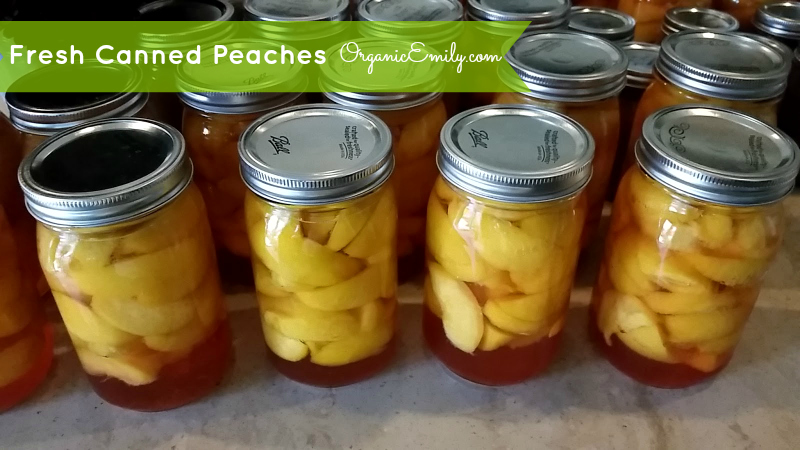
Fresh Canned Peaches

Fresh Canned PeachesI love this time of year when the fruit is on in abundance.  Peaches are one of my favorites!  This recipe is simple and a healthier version of the stuff processed in syrup.  I usually buy 2 large boxes form the farmer’s market to make 20 quarts plus some for making fruit leather or jam.

Recipe

Fresh Peaches

1 tablespoon organic sugar per quart

1 teaspoon citric acid per quart

Boiling hot water

Blanch the peaches for 30 seconds.  Remove the skin and pit and cut into slices.  Place peaches in jar filling to rim.  Add the sugar and citric acid.  Pour boiling hot water into the jar until there is a 3/4 inch space to the top.  Clean the edges and put on lids and rings.  Process for 25 minutes.

Homemade Canned Tomatoes

Homemade Canned TomatoesA much healthier and inexpensive alternative to store bought canned tomatoes.  This recipe is simple, but just takes a bit of time.  A day of canning tomatoes is always worth the year’s supply!  I usually by 3 large boxes from the farmer’s market to produce 30 quarts.  We go through a lot of tomatoes through the year, using it in soup, chili and stews.

Recipe

Fresh tomatoes

1/4 teaspoon sea salt

Blanch the tomatoes in boiling water for 1-3 minutes depending on how ripe the tomatoes are.  Remove skin and core.  Cut in to quarters and tightly pack into clean quart size glass jars.  Place in hot water bath.  I like to have water boiling to add to the bath to keep it warm.  Just before putting the lids on add the salt.  Depending on how large your processor is you should be able to fit 5-6 quarts inside.  Process for 45 minutes.

Cinnamon Pear Jam

Cinnamon Pear JamThis jam is the essence of fall!  It’s so good on toast or even with savory pot stickers!  Delicious!  This recipe is simple and requires no pectin.  Makes 8 pints of jam.

Recipe

16 cups pear puree

8 cups sugar

4 teaspoons cinnamon

1 teaspoon ground cloves

Process the pears through a Victoria Strainer and pour the puree into a large pot.  Add the sugar, cinnamon and cloves.  Bring to a boil and simmer on medium heat until thickened, about 45-60 minutes.  Place in pint glass jars and process for 10 minutes.