Medicinal Herb – Lemon Balm

Lemon Balm

Medicinal Herb Post #22 written June 26, 2018

Lemon Balm – Melissa officinalis

This incredible herb is a part of our mint family again. It prefers moist soil and some shade. Harvest anytime for eating or just before it flowers for the highest medicinal quality. Keep cutting any of the mint family herbs and they’ll come back again for additional use. Leaves are the medicine. And it tends to be better behaved than peppermint so it doesn’t spread as fast, but will reseed easily.

Lemon balm is used to calm the nervous and digestive systems. It is good for stress related stomach pain, nausea, bloating and heartburn. It can help with menstrual pain and stress. Use with blue vervain, milky oats tops, rose, and lavender to help one find relief and comfort. It can also be useful with those who suffer from heart palpitations due to stress. Use with motherwort, hawthorn flowers and berries.

It’s a powerful brain herb as it is useful for anxiety, memory, headaches, insomnia, grief, ADHD, irritability and seasonal depression. I love using it with Holy basil, Ashwaghanda and St. John’s Wort for anxiety/depression in loved ones. Lemon balm is the best antiviral for killing the herpes simplex virus. It stops the replication of it on contact. It’s incredibly effective of shingles, chicken pox, herpes and cold sores. I would also take it internally as well.

I’m currently working on improving a salve for anything associated with herpe viral infections, using calendula, lemon balm, St. John’s Wort, and marshmallow. I’m solar infusing the herbs in a jar covered with olive oil. After 2-4 weeks I’ll strain and add 1/4 cup beeswax for every cup of infused oil I have. Then I’ll add vitamin E, lavender and Melissa blend essential oils and put into jars.

It can be used in any digestive formula like colic/gas or a calming nervous system formula. It’s also good as a cold infusion tea or chopped up in a fruit salad.

The only contraindication would be for those with low functioning thyroid because it can lower thyroid function. Bugleweed and Motherwort are two other herbs that also lower thyroid function. However, for those with an overactive thyroid it would be helpful.  It is still safe to use internally short term for those with mild hypothyroid problems if needed, but not for long periods of time.

Medicinal Herb – Peppermint and Spearmint

peppermint plant spearmint

Medicinal Herb Post #21 written on June 26, 2018

Peppermint – Mentha piperita (on the left)
AND
Spearmint – Mentha spicata (on the right)

I’m posting about both of these herbs together because they are closely related in their medicinal properties, however they do hold different qualities and are worth going over. All plants in the mint family, Lamiaceae, have square stems with alternating and opposing leaves coming off the stem. If a plant has a square stem or its leaves are opposing and alternating, but don’t posses both qualities, it’s not in the mint family. All mints usually have two jobs, first they want to do something to your nervous system and second, they want to kill something. They tend to affect the digestive system in some way as well. This group of plants is very large.

Peppermint likes to grow in moist well draining soil. It does well in full sun or part shade. It can be very invasive and should be grown in a small bed surrounded by concrete (not concrete edging)/deep barrier or in a large pot. It can serve as a nice ground cover, especially if you’re harvesting and using it often. I’ve read that it contains the most volitile oils when it has just bloomed, but I still harvest it as needed. All mints and plants that contain mucilage like comfrey and marshmallow retain more medicine when processed as a cold infusion. A cold infusion is simply pouring room temperature water over the herbs and allowing them to steep for 4 to 12 hours over night.

Peppermint is the go to herb for any digestion problem that would cause spasming, like cramping, gas, nausea and vomiting. It makes for a great catalyst herb when used with other mild herbs like Echinacea. It’s great for headaches when combined with chamomile, good foe bee stings, burns when mixed with raw honey and can help relieve toothaches. It’s a powerful antimicrobial and is stimulating to the nervous system. I like to combine it with elder and yarrow to combat the cold/flu. My new favorite herbal tea is equal parts hibiscus petals, peppermint and lemon balm. So refreshing during those hot summer days.

Spearmint is similar to peppermint as it will spread easily by root runners. It really loves water and will do well in full sun or partial shade. It is recommended to plant different kinds of mints separate from each other as they can easily ‘interbreed’ and won’t be as medicinally active. Spearmint is more mild than peppermint and is usually better for children and pregnant women. It is amphoteric, meaning it moves in the direction the body needs. It can be stimulating but also relaxing and is very helpful in nervous system blends. It’s great for digestive issues as well.

My favorite pregnancy tea is equal parts raspberry leaf, spearmint, nettles, rose petals and milky oat tops.

My favorite formula to give to my kids to combat illness is a glycerite made with equal parts yarrow, spearmint, red clover, elder flower and mullein.

For a calming remedy in children try equal parts chamomile, lemon balm and spearmint. Use as a tea or glycerite.

And finally one of my favorite dishes is a fruit salad I love to eat using either peppermint or spearmint. You can always add more of a particular fruit if you want.
1 pineapple, chopped
1 canteloupe, chopped
1 bunch of green grapes
6 peaches sliced
2 pounds quartered strawberries
2 pints blue berries
2 raspberries and blackberries if you want
Place together in a large bowl.
Mix together 1/2 cup raw honey, zest and juice of 2 limes and 1/4 cup chopped peppermint and drizzle on top. Heavenly!

Mango Mint Chicken Salad with Creamy Avocado Dressing

Mango Mint Chicken Salad

This flavorful salad is a healthy and delicious spring/summer meal for the family or a gathering!

Recipe

Marinate 4 chicken breasts for at least 2 up to 24 hrs in:
1/2 cup good olive oil
1/4 cup white wine vinegar
1 tablespoon Dijon mustard
Salt and pepper to taste

Grill chicken when ready

For the dressing blend together:
1 cup extra virgin olive oil
1 mango, peeled and pitted
1/4 cup fresh cilantro
1/4 cup fresh mint
1 teaspoons curry powder
1 tablespoon white wine vinegar or juice of 1 lemon
2-4 tablespoons honey
Salt and pepper to taste

For the salad
2 ripe avocados, sliced
1 peeled and sliced mango
1/4 thinly sliced red onion
As much spring mix as you want to use
Chopped basil as a garnish

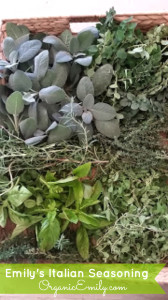
Emily’s Italian Herb Seasoning

rp_Italian-Herb-Seasoning-168x300.jpg

I came across a wonderful Italian seasoning a few years ago.  When it was all gone I looked all over for it and couldn’t find it anywhere, so I decided to make my own!  This is a wonderful seasoning that I use in many of my dishes!  And the best part is, I grow all my own herbs!

Recipe

Use equal parts dried or adjust to your liking:

Sage, Thyme, Savory, Rosemary, Sweet Marjoram, Basil, Oregano.

Dry the herbs in a basket out of direct sunlight.  Once very dry, use a mortal and pestle to crush the herbs.  Place in a glass jar and enjoy!

Sun-dried Tomato, Feta and Avocado Pasta

Sun-dried Tomato, Feta and Avocado PastaThis is by far my favorite pasta salad!  It’s full of so much flavor!  Take this one to your next summer outing for a big hit!

Recipe

16 oz. package of penne or spiral pasta, cooked

olive oil

balsamic vinegar

sea salt and pepper

4-6 cloves garlic, chopped

1 small red onion, finely chopped

1 green pepper, chopped

16 oz. jar of sun-dried tomatoes with oil

8 oz. feta cheese, crumbled

1/4 c. fresh parsley, chopped

2 avocados, chopped

juice of 1 lemon

Once the pasta is finished cooking and strained, place on large bowl.  While still warm drizzle about 1/4 c. olive oil and 3 T. baslamic vinegar on top.  Add the salt and pepper, garlic and red onion.  Mix well and check for seasonings.  Add the pepper, tomatoes, feta and parsley.  Just before serving add the avocado and lemon.  Serves 10-12 as a side.

Companion Planting: Where to Begin?

Companion Planting Front YardCompanion Planting is so much fun!  What is it you ask?  Well, it’s been around for a really long time!  The Romans and the Native Americans used this method of gardening with great success!  Companion planting is simply planting your herbs and flowers with your vegetables.  In the picture above I have multiple flowers that attract pollinators and herbs that I use in my kitchen!  Isn’t it beautiful!  This year I added cauliflower, cabbage, lettuce and onions!  There are multiple benefits that come from this.  Because some pesky bugs don’t like certain herbs and veggies we can decrease the amount of bug problems in the garden.  The bugs also get a little confused as to where all the cabbage is with all the other plants around it, so we can decrease the loss of plants to pests.  We can also attract beneficial insects by planting beautiful flowers with our veggies increasing their yield in production.   And finally because we aren’t dealing with pests we don’t have to use so many chemicals therefore keeping our garden organic!

If you’ve decided to give companion planting a try this year there are a few things you may want to think about.  First make a plan.  Think about what veggies you are going to use.  What colors of flowers do you like?  When choosing plants think about the height and space that is required for their needs.  If planting in a container, use the taller plants in the middle.  When planting in medium to large sized beds make sure the tall plants are in the back and the smaller, low growing plants are placed in the front.  That way you will be able to see everything you’ve planted and nothing gets covered.  Choose flowers that go well together.  I really like bright orange or pink and deep purple together.  Bright colored flowers will also attract beneficial insects increasing the yield of flower blossoms and veggies.  Plant vegetables that like the shade under taller plants like lettuce and spinach.  And finally it’s really important to know which herbs, flowers and vegetables make good families and who their friends are.  Checkout this beginners list of family and friends below to get started!

The Tomato Family

Vegetables that are included in the tomato family are, Tomatoes, Peppers and Eggplant.  Greens, including Lettuce, Beets, Spinach and Chard also do well with their friends list.

Friends: Basil, Cleome, Cosmos, Parsley, Queen-Anne’s Lace, Asters and onions/garlic (with greens)

The Potato Family

Vegetables that also benefit from the list of friends below besides Potatoes are Beans and Peas.

Friends: Calendula (pot marigold), Cosmos, Basil, Tarragon, Daises, Dill, Rosemary, Sweet Annie


The Cabbage Family

Cabbage family crops include, Broccoli, Kale, kohlrabi, Radishes, Turnips and Cauliflower.  Other plants that go well with its friends are Lettuce and Root crops.

Friends: Asters, Calendula, Chamomile, Chrysanthemums, Cosmos, Dill, Marigolds, Zinnias, Parsley, Radishes, Rosemary, Sage and Thyme.


The Squash Family

Squash family crops include all Summer and Winter type squashes including Melons and Cucumbers.  Vegetables outside of the family that benefit from the same friends are, corn and pole beans.

Friends: Borage, Dill, Nasturtiums, Sunflowers


The Root Family

This family includes Celery and Carrots.  Greens and Onions, Leeks, Chives, Garlic also benefit from their friends too.

Friends: Caraway, Chamomile, Cleome, Cosmos, Dill, Fennel, Queen-Anne’s Lace, Poppies, Asters


The Perennial Family

Vegetables included in this family are Asparagus, Horseradish, Strawberries, Rhubarb and Raspberries.

Friends:  Borage, Sweet Alyssum, Chives, Swan River Daises (for strawberries), Asters, Bee Balm, Black-Eyed Susan’s, Chamomile, Creeping Thyme, Lovage, Tansy, Yarrow (for horseradish), Cosmos, Dill, Hollyhocks, and Sweet Annie (for asparagus)


Some other plants not listed above that attract beneficial insects include:

Catnip, Anise, Chervil, Curry Plant, Fennel, Lavender, Rue, Spearmint/Peppermint (keep contained), Tansy, Bee Balm, Goldenrod, Pincushion Flowers, Echinacea (Cone Flowers), Rock Cress, Yarrow, Bachlor’s Button, Black-Eyed Susan, Blanket Flower, Coreopsis, Morning Glory, Gazania, Dandelion, Lamb’s Quarters, Wild Mustards.


For more information check out my favorite companion planting book called Great Garden Companions


Spinach, Pesto Pea Salad

Spinach, Pesto Pea SaladThis simple salad is to die for!  It’s flavor is out of this world good!  How can it not be when the dressing is all basil pesto?

Recipe

8 cups fresh spinach

1 cup chopped almonds

1/2 cup fresh Parmesan

2 cups frozen peas, thawed

1-2 cups fresh basil, homemade recipe here

Mix all ingredients except for the pesto in a large serving bowl.  Mix in the pesto just before serving.


Chicken Salad with Fresh Tarragon and Grapes

Chicken VeroniqueThis salad is good on bread or rolls for a sandwich or simply on greens.  The fresh tarragon gives this dish a fabulous flavor with a yummy crunch from the grapes and celery!

Recipe

4 chicken breasts, bone in, skin on
good olive oil
kosher salt and pepper
Rub chicken with olive oil, salt and pepper.  Roast in a 350 degree oven for 40-50 minutes until done.  Let cool slightly and then chop into bite size pieces.
In the meantime, mix together in a large bowl:
1/2 cup good mayo
1 1/2 tablespoons fresh chopped tarragon
1 cup celery, diced small
1 cup green or red grapes, cut in half
Add the chicken, mix until the chicken is coated in the sauce and chill for 4-24 hours before serving.

Quinoa Tabbouleh

Quinoa TabboulehSpring is in the air and those cold hardy herbs like mint and parsley are waking up from their winter’s sleep!  This salad pulls those herbs from the garden to your table and is so delicious and satisfying!  I love the sweetness from the cucumber and mint and the tang from the tomatoes and lemon!  Great for lunch or a side for entertaining!

Recipe

1 cup quinoa

2 cups water

1/4 cup fresh lemon juice

1/4 cup olive oil

1 teaspoon kosher sea salt

1 teaspoon freshly ground black pepper

1 English cucumber, chopped

2 cups cherry tomatoes cut in half

1 cup chopped scallions (about one bunch)

1 cup chopped fresh mint leaves

1 cup chopped fresh parsley

Cook the quinoa and water over the stove top or in a rice cooker.  If using a stove top bring to a boil and then cover and allow to simmer until cooked through.  Chop all herbs and veggies and place in serving bowl.  While still hot add the oil, lemon juice, salt and pepper to the quinoa.  Once the quinoa has cooled, but is still warm add it to the veggie/herb mix and combine.  Allow to sit for a few hours in the fridge before serving so the flavors can improve.  Enjoy!

Growing and Using Rosemary

Rosemary Plant

Rosemary is one of my most favorite herbs!  I love the smell and flavor in many sweet and savory dishes!  I throw it into loaves of bread, Sunday roast and even into stone fruit rustic pies!  Not only does rosemary have many culinary purposes, but it also has medicinal properties too!

Growing Rosemary

Rosemary doesn’t like really dry soil or really wet soil.  However it does do well with moist soil as it grows naturally in places close to the coast with a constant mist of water.  If you can keep the soil in between the extremes you will have success.  I like growing the variety of rosemary called “Arp”.  It is supposed to get through our cold Utah winters in the northern region.  I have had some plants die on me though so be sure to plant it next to a fence or house or boulder for added protection.  In dry winters it may need to be watered once a month.   Rosemary loves fertile soil and full sunlight, although it can tolerate some shade.  Rosemary will do well in a pot brought indoors during the winter if placed in a sunny window and misted with a spray bottle and an oscillating fan blown occasionally to prevent fungus growth.  If you already have a plant outside, try taking a root and stem cutting and planting in a pot to bring indoors.


Medicinal Uses

Rosemary has been used for centuries to help improve concentration and memory.

Eases headaches, including migraines.

Rosemary is a moderate stimulant because it enhances red blood cell uptake of oxygen increasing a persons energy.

It has anti-inflammatory properties that allow relief for joint arthritis pain and muscle pain.

It can be used fresh or dried as a good digestive aid to assimilate digestive fats and carbohydrates.

Try making a tea with rosemary and lemon thyme instead of coffee or soda to boost energy!


Infused Rosemary Oil

Solar Infused Rosemary Oil

Go to any grocery store that sells infused oils with all kinds of gourmet flavors and you may spend a pretty penny for a small bottle.  Try making your own!  It is so easy and inexpensive!  Rosemary among many other herbs like garlic, basil, sage, thyme and even lemon or orange peel infuse into olive oil very well.

Place herb in bottle and make sure the olive oil covers it completely.  Set in a sunny window seal for 2-4 weeks and then use it as dipping oil for a rustic loaf of bread.  You can also do this over the stove top if you need the oil sooner.  Just warm the oil on low heat for 30 minutes with your herb of choice.